
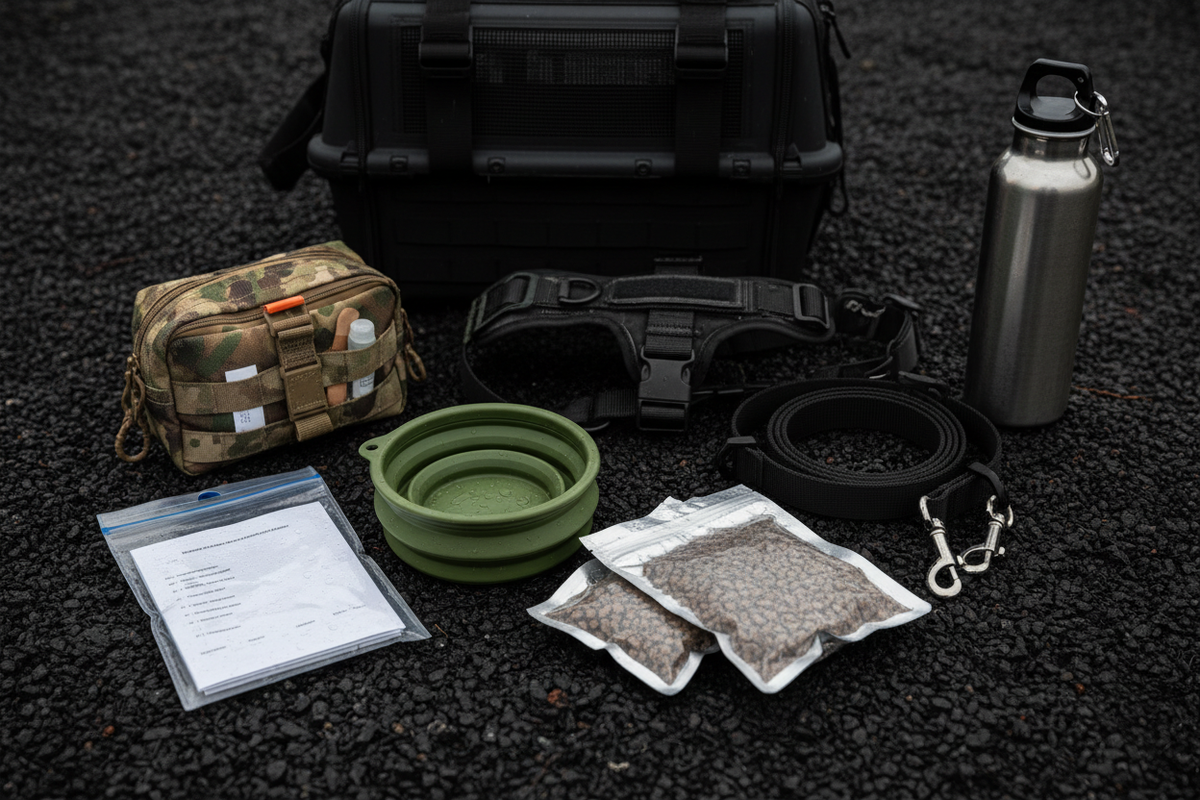

When disaster strikes, the window to evacuate can close in a matter of minutes. While most families know to pack a 72-hour go-bag for themselves, our four-legged family members are often overlooked until the last second.
According to the Federal Emergency Management Agency (FEMA) and the Centers for Disease Control and Prevention (CDC), pet owners must have a dedicated emergency kit and a concrete evacuation plan. Shelters, hotels, and rescue teams require specific documentation and supplies to accommodate animals during a crisis.
Here is the ultimate, agency-backed checklist for building your pet's emergency disaster kit.
1. Food and Hydration (The 7-Day Rule)
While humans typically plan for 72 hours of initial supplies, both FEMA and the American Red Cross recommend packing a 7-day supply of food and water for pets.
- Water: Pets need roughly one ounce of water per pound of body weight daily, plus extra for extreme heat or stress. Keep this stored in sealed, heavy-duty containers.
- Food: Store dry kibble in airtight, waterproof containers to prevent spoilage and pest contamination. If you pack canned food, ensure you have a manual can opener.
- Collapsible Bowls: Pack silicone, collapsible bowls. They save crucial space in your tactical bag and are easy to sanitize.
2. Sanitation and Hygiene
Disasters are chaotic, and maintaining sanitation is critical to preventing the spread of disease in confined spaces like vehicles or emergency shelters.
- For Dogs: Heavy-duty waste bags, puppy pads (for extended time in carriers or vehicles), and pet-safe disinfectant wipes.
- For Cats: A small, travel-sized litter box, a week's worth of litter, a scoop, and trash bags.
- Paper Towels & Liquid Dish Soap: Essential for cleaning food bowls and managing unexpected messes.
3. Medical Supplies and First Aid
Your pet's first aid kit should be separate from your human kit, as many human medications (like ibuprofen or acetaminophen) are highly toxic to animals.
- Medications: A minimum two-week supply of any prescription medications in their original prescription bottles with the dosage instructions clearly printed.
- The First Aid Kit: According to veterinary disaster guidelines, this should include gauze pads, adhesive medical tape, styptic powder (to stop bleeding from torn nails), blunt-tip scissors, tweezers (for ticks or debris), a digital thermometer, and 3% hydrogen peroxide (only use to induce vomiting if explicitly directed by a poison control vet). Make sure your own supplies are covered with a proper trauma kit.
4. Documentation (The "Proof of Ownership" Portfolio)
If you are separated from your pet, or if you need to enter a public shelter, documentation is your only currency. Store these in a waterproof document bag or a sealed Ziploc:
- Vaccination Records: Most emergency shelters require proof of Rabies and Bordetella (kennel cough) vaccinations before allowing pets inside.
- Microchip Information: The microchip number and the registry phone number. Ensure your address is updated in the database.
- Photographs: Recent, printed photos of you with your pet — critical for proving ownership if your pet is rescued by emergency workers.
- Veterinary Contacts: The phone number for your primary vet and an emergency 24-hour animal hospital.
5. Transport, Restraint, and Comfort
Animals sense barometric pressure drops and human anxiety. A normally docile pet may panic, bolt, or become aggressive during a disaster.
- Carriers: A properly sized, well-ventilated carrier for each pet. The animal should be able to stand up and turn around inside. Write your name, phone number, and pet's name on the carrier in permanent marker.
- Harness and Leash: Use a sturdy harness rather than just a collar, as panicked dogs can slip out of collars. Keep an extra leash in your kit.
- Familiar Items: Pack a familiar blanket, an unwashed t-shirt with your scent, and a favorite toy. Thundershirts or vet-prescribed anxiety medication can also be literal lifesavers for travel-stressed pets.
Preparation is an Action: Don't wait for a hurricane warning or a wildfire evacuation order. Build your pet's kit alongside your family's 72-hour bags today.